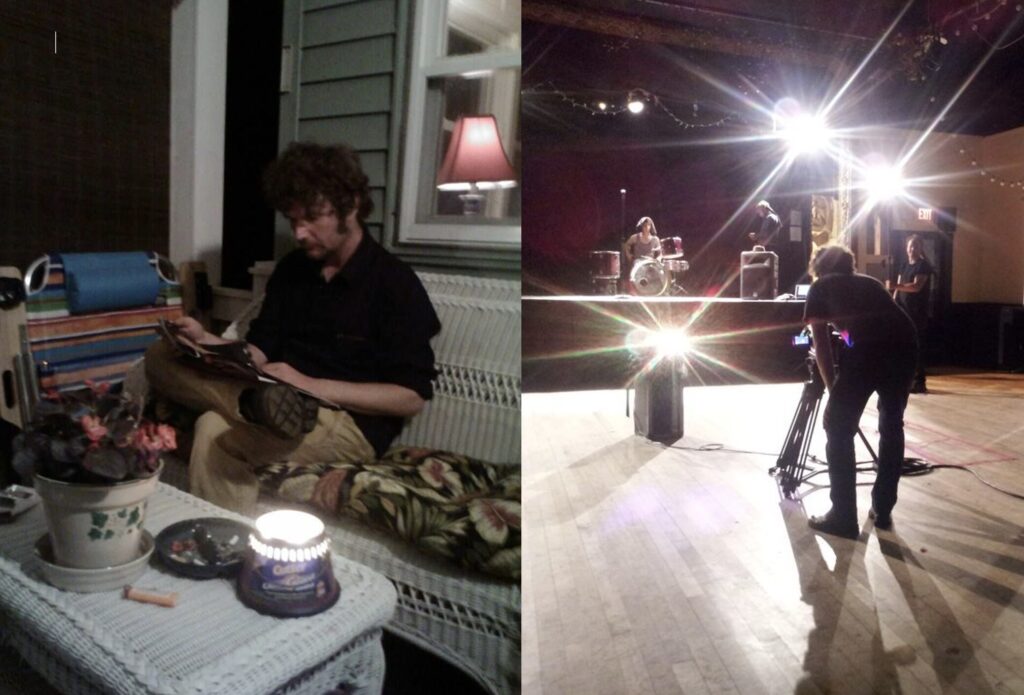
Eleventh Hour Shine: The story of a rock album, loss, and resilience is a series of short essays about the process of creating the Pragnus Gray album Eleventh Hour Shine.
The series originally set out to explore the experience of making a record while trying to work responsibly as the chief steward of the process and eventually grew into a deeper inquiry into the personal resilience that was required of me during this process when some serious life challenges arose. The questions and ideas span several arenas: the practice of making music together, the work of personal growth, and the effort to build healthy community in classrooms, projects, and workplaces.
Another theme that runs through this series is the responsibility to let our light shine while also welcoming the shine of others.
I am aware that the famous poem called “Our Deepest Fear” written by Marianne Williamson, former Democratic Presidential candidate and writer of spiritual books has been quoted by thousands of writers and speakers over the years, but sometimes a small pearl of wisdom is worth repeating, so I am okay with repeating the following fragment of her wisdom:
“As we let our own light shine,
We unconsciously give other people permission to do the same.
As we’re liberated from our own fear,
Our presence automatically liberates others.”
Another vital thread that runs through the essays is a single conviction I’ve been writing about for years: my belief that excellence depends on human relationships grounded in mutual respect and empathy and the willingness to let others shine.
Whether in art, teaching, family, the workplace, community development or any other endeavor involving the sustainability of human relationships, I continue to believe that we have to develop the capacity to not feel dimmed by the light of others and the willingness to make room for them to shine. And we also have to develop the capacity to take up our space in this life and to be who we are—to shine without regard for how others might feel dimmed by that shine for reasons that have nothing to do with us.
In many arenas of my life I have seen too many people work to stamp out the light of others. I’ve seen teachers condemn students, bosses bully workers, roommates dominate spaces, artists sabotage artists, parents abuse children, leaders condemning the unwashed, ideologues dehumanizing undesirables, the young desecrate the old, and so much more.
My convictions around this theme was tested throughout the project, especially during the final stages of sound production, when an unexpected tragedy changed not only the course of the project but also my personal and professional life.
With that turning point in mind, the essays also explore the impact of trauma, the process of healing, and the importance of reconnecting with what I call the ‘ground experience’ during times of upheaval.
I first drafted the beginning of this series in 2014, publishing some parts online. Now, a decade later, I am able to revise the opening essays and complete the final three pieces that were still in development when the tragedy occurred. I had originally hoped to publish the entire series soon after the album’s release, but at the time I could no longer continue—for reasons that will become clear as the essays unfold.
Now, with time and perspective, I’m ready to return to this writing project and share these essays in the weeks and months ahead. Thank you for reading.
Coming soon: Chapter 1 • Introduction—Birth of a Vision